The right animation style helps the story feel clear and recognizably yours. It should fit the subject, audience, brand, and placement of the video—not just follow a visual trend.
Start with the message and audience
Write down what viewers should understand and who they are. A software workflow may need clear interface graphics and simplified diagrams. A physical product may need close views of its shape, materials, or moving parts. A brand story may call for character, atmosphere, or a more expressive visual metaphor.
Use your brand as a starting point
Gather the elements that already make your identity recognizable: logo, colours, type, illustration, photography, and tone of voice. Decide which need to appear in the video and which can be adapted for motion. Consistency does not mean putting the logo on every frame; it means the video feels connected to the brand while serving the story.
Choose a style that suits the subject
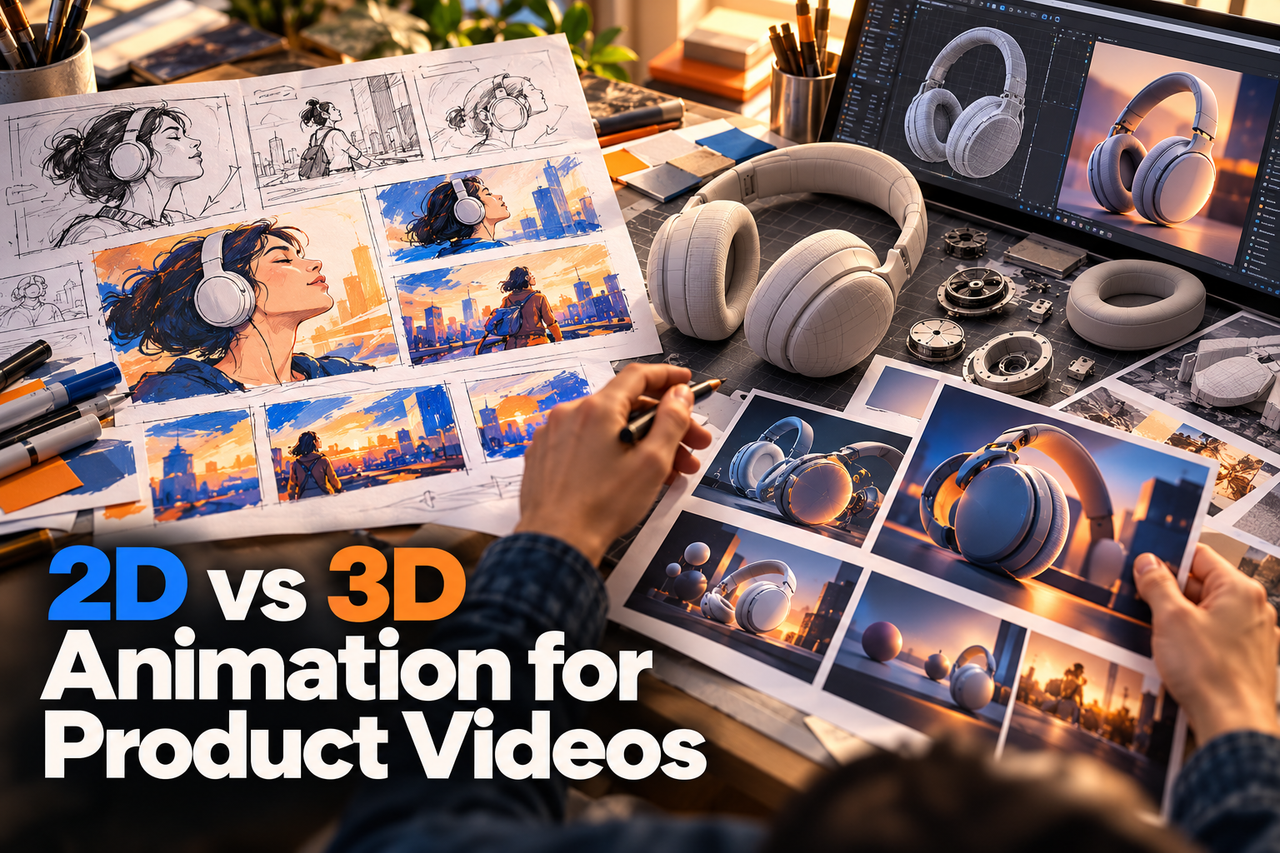
2D animation can clarify software, processes, and abstract ideas. For SaaS, a mixture of illustration and interface graphics may help explain how a workflow fits together; see NXTALE’s SaaS explainer video service. When a physical product's form and materials matter, 3D animation or 3D product visualization may show details more clearly.
Review style frames before animation
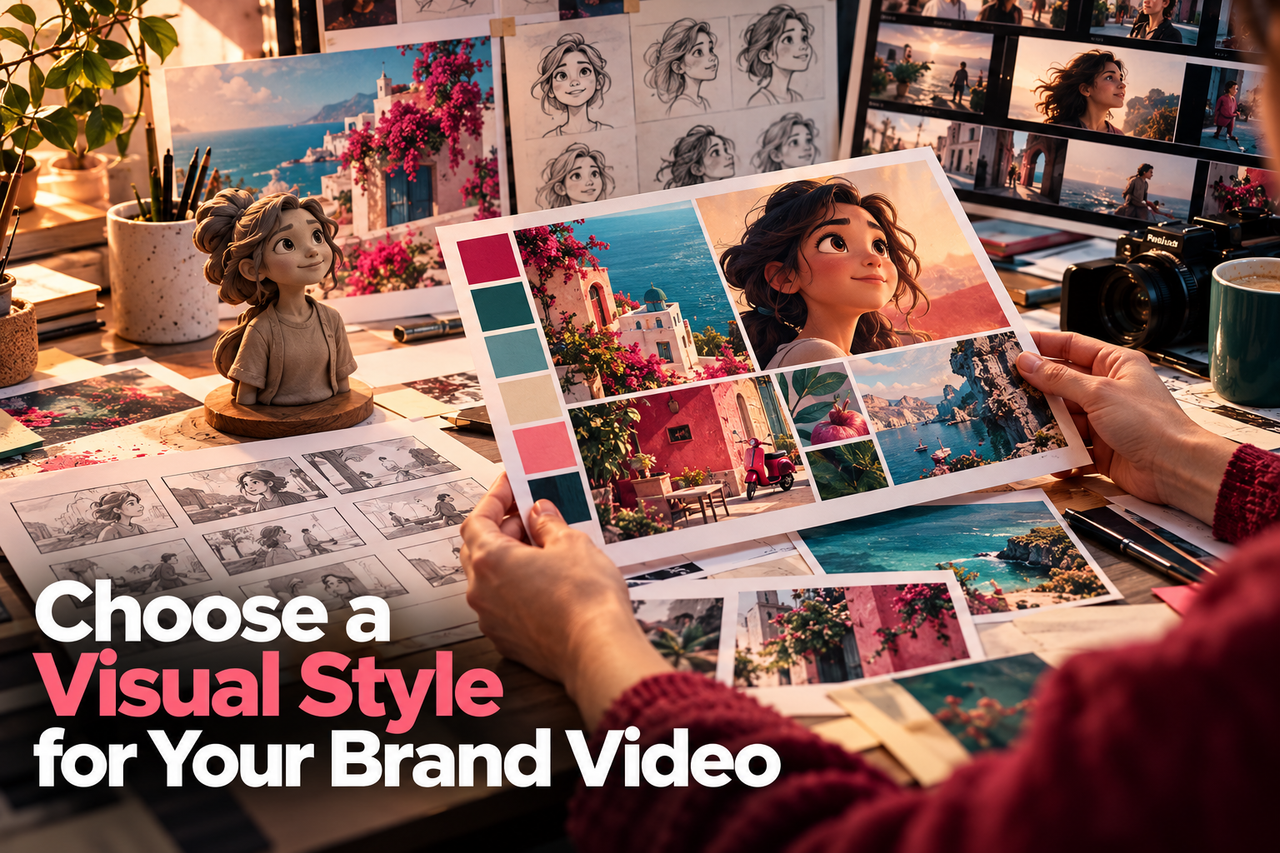
A style frame is a still image that tests how the proposed art direction handles real content. Review frames with the actual product, interface, or key message rather than placeholder text. Check whether the design stays readable at the intended screen size and whether people understand the subject without a long explanation.
- Compare a small number of genuinely different directions.
- Check colour contrast, type size, and interface legibility.
- Ask reviewers to comment on clarity and brand fit, not just personal taste.
Think about future videos too
If you expect to make more videos, define reusable choices such as colour use, illustration rules, transitions, and how interface screens are shown. A simple visual system can make later videos feel related while leaving room for each story to have its own emphasis.
Make the decision against the brief
Before approving a style, return to the original communication goal. Does it make the subject easier to understand? Does it fit the audience and placement? Can it support the scenes the script needs? A style that answers those questions is a stronger choice than one selected for novelty alone.