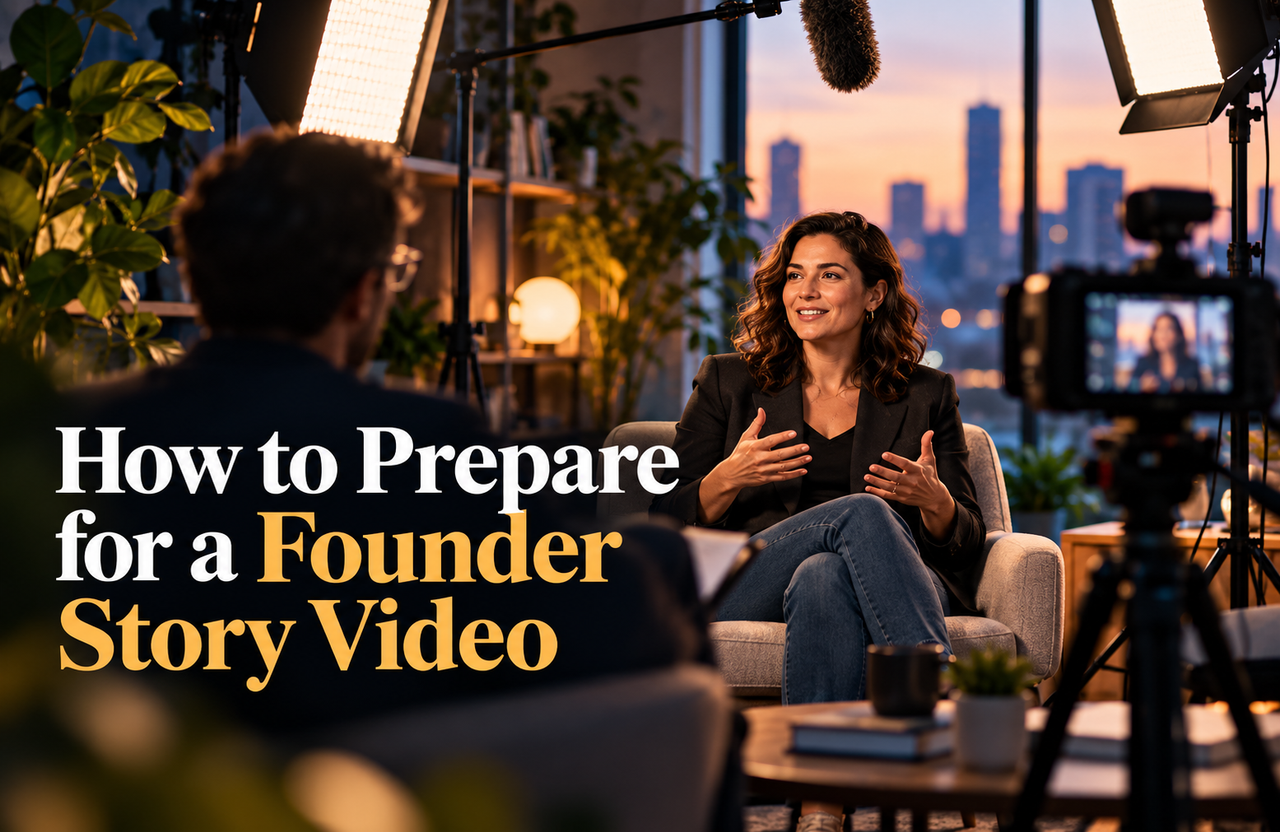
A founder story video can help viewers understand why a company exists and how its perspective shapes the work. It is most convincing when it sounds like a real person describing real decisions. Preparation should give the conversation direction without turning it into a memorized speech.
Decide what the audience should understand
Choose the audience and the question the story will answer. A prospective customer may want to understand the problem that led to the product; a potential hire may want to learn about the company’s values and working environment. Keep the story connected to a useful point of view rather than a full company chronology.
Select a few moments that explain the company’s direction: a customer need, a difficult decision, a change in approach, or a lesson from building the product. Specific examples are easier to follow than broad claims about passion or innovation.
Prepare interview themes, not a script
Create a short list of open questions and share the themes with the founder in advance. Ask for concrete details: what happened, what the founder learned, and what changed as a result. Avoid asking people to repeat marketing copy or deliver a line exactly as written.
If a fact, number, or customer reference will appear, confirm it before filming. Separate what the founder knows personally from claims that need documentation or approval from another team.
Plan the setting and production
Choose a location that supports the story and is practical for sound, light, access, and permissions. Decide whether the founder should speak to camera, take part in a guided interview, or combine both. Capture supporting footage that reflects the real work rather than generic office scenes.
Agree on video length, where it will appear, captions, cutdowns, and any language versions. Let the production team know if the founder has schedule limits or specific accessibility needs.
Edit for a clear, natural story
Keep the founder’s meaning intact and remove only material that distracts from the story. Check names, dates, product claims, and any customer details. Give the founder a fair review process for factual errors and confirm the final video will be used only in approved places.
The finished film should sound like the founder and help the audience understand the company more clearly.