A brand or product story can be told with live action, animation, or a combination of both. The useful question is not which format is universally better; it is which one will make the subject and message easiest for the intended audience to understand.
When live action is a strong fit
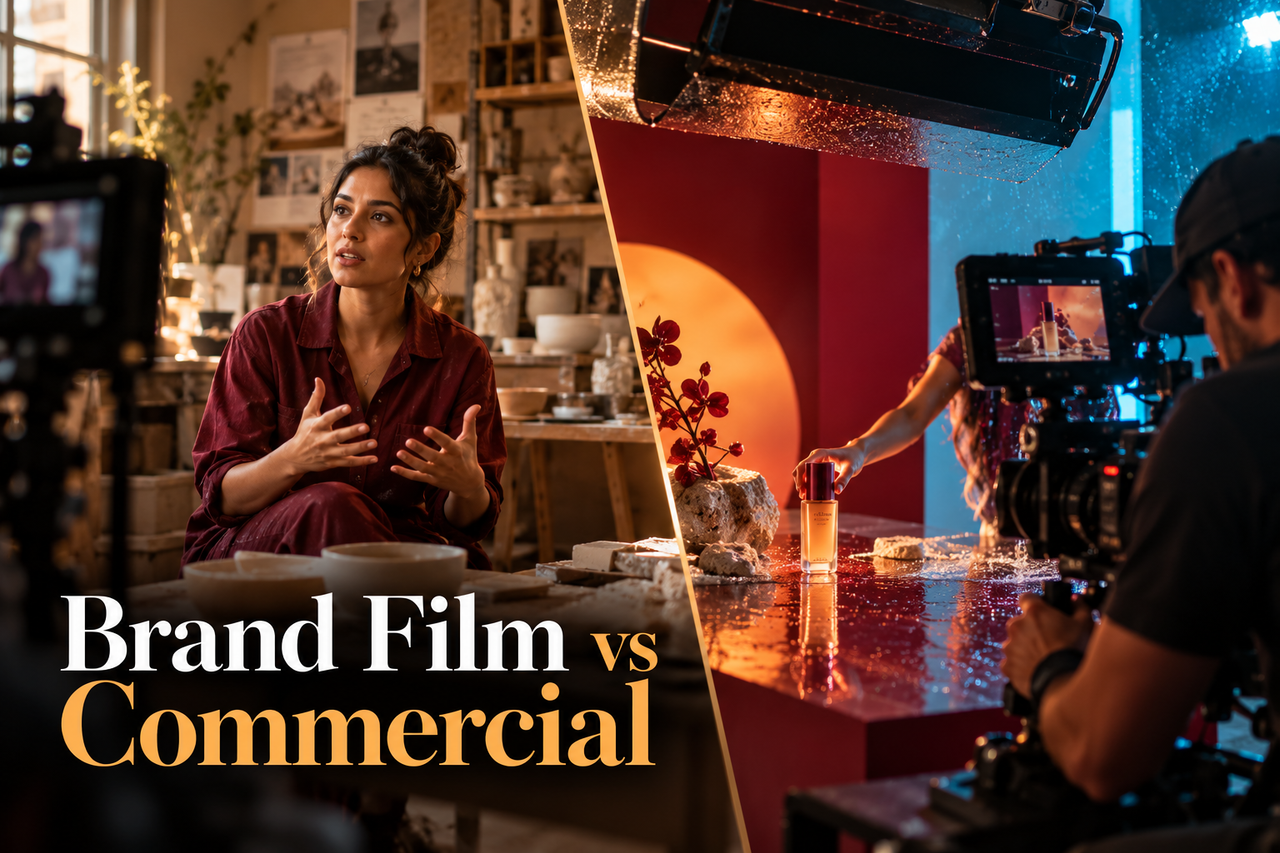
Live action can show real people, places, materials, and environments. It may suit a founder story, customer interview, workplace film, or product that benefits from being seen in a real setting. People can bring expression and direct experience to a story, while locations provide context that would otherwise need to be built.
Plan for the practical realities of filming: schedules, locations, permissions, product availability, and continuity. If a product is not ready or the location is difficult to access, those constraints may affect what can be captured and when.
When animation can clarify the idea
Animation can simplify a process, show an internal mechanism, or visualize a service or software workflow that is hard to film. It allows the team to control timing, framing, and visual emphasis, and can combine interface graphics, diagrams, characters, or product imagery in one style.
For physical products, 3D animation can reveal shape and components from selected angles. For abstract messages or software, 2D animation may help connect a user problem to a sequence of product actions. Keep the depiction accurate and distinguish metaphor from literal product behaviour.
Consider a hybrid story
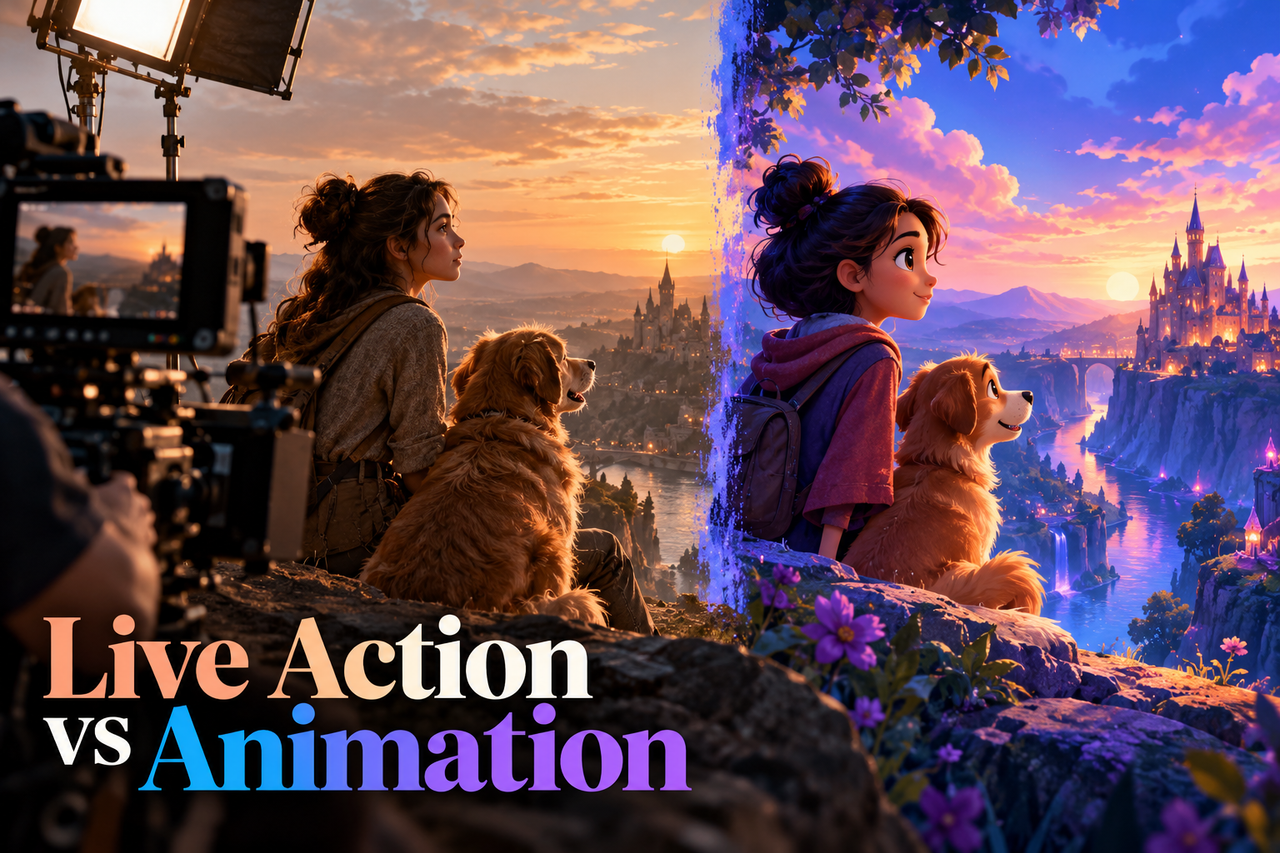
A hybrid video can combine interviews or live-action footage with animated labels, diagrams, interface screens, or 3D product views. Use each form where it helps most. The transitions should feel planned, and the animation should support the story rather than interrupt it.
Decide how the video will be used before choosing a format. A product-page demo, company overview, customer story, and campaign ad place different demands on pacing, detail, and sound. Think about future edits and whether the core footage or animation can support additional versions.
Make the decision with four questions
- What does the viewer need to understand or believe?
- Is the subject easiest to show as a real scene, a designed visual, or both?
- Which approved assets, locations, people, and product details are available?
- Where will the video appear, and what should a viewer do next?
Test the story before production
Write a short outline and create a sample frame or storyboard. Ask someone outside the project to explain what they think the video is about. If the message is unclear, revise the idea before committing to a production style. The right format is the one that helps the story stay clear and credible.