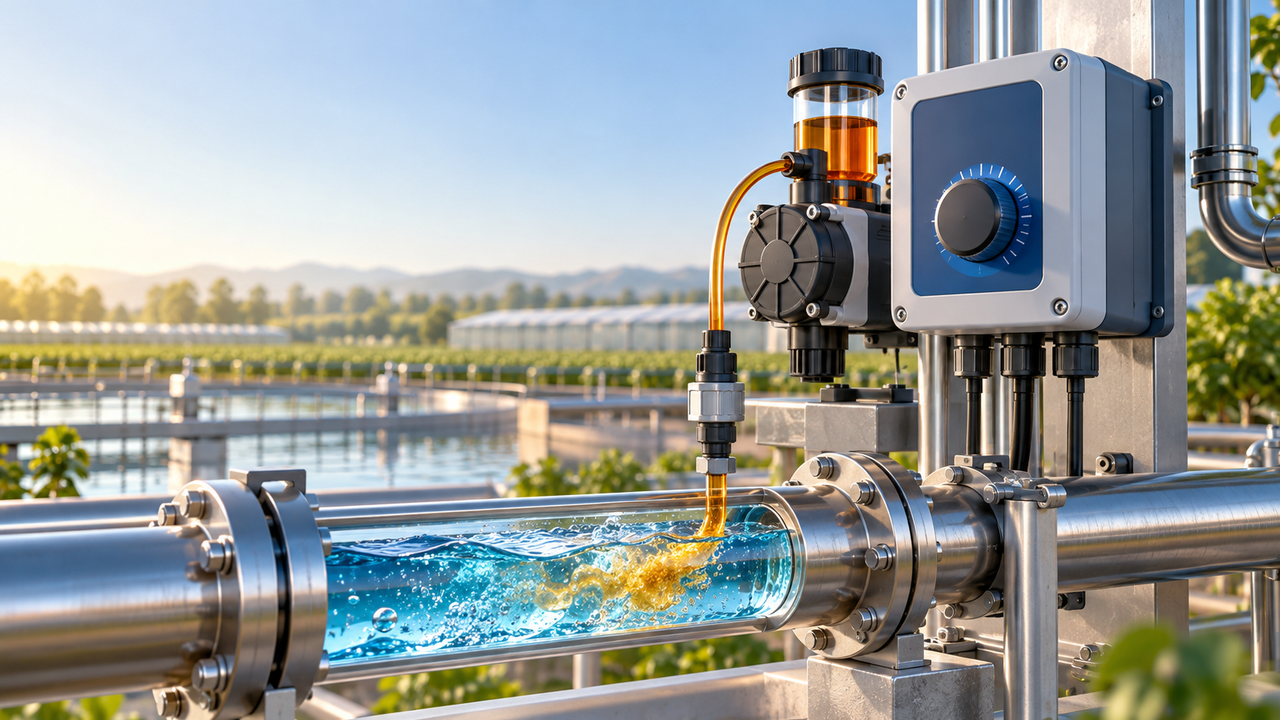
Water-treatment equipment rarely tells its whole story from the outside. A buyer may see a controller, pump and pipework, yet still need to understand how those parts connect, what the operator changes and how treatment moves through the system.
Why water-treatment equipment is difficult to explain on camera
A live-action shoot can establish a real installation, but important actions may happen inside a pipe or closed housing. The camera may also struggle to show a dosing adjustment and its effect on the wider process in one coherent view.
3D industrial product animation can place the product, its connections and the hidden flow in the same visual sequence. The aim is not to add spectacle. It is to give the viewer a clear mental model of how the system works.
Start with one buyer question
Before choosing camera moves or materials, define the practical question the animation must answer. For water-treatment equipment, that question might be:
- Where does the controller sit in the existing water system?
- How does the operator select or adjust the required setting?
- How do the controller, dosing pump and water line work together?
- Which hidden part of the treatment flow must become visible?
This keeps the article and animation focused on a specific water-treatment explanation, while the broader service page can cover the full range of industrial animation applications.
ChemDial: showing the controller in its system
The ChemDial product animation provides a useful example. ChemDial by AquaApproach is a chemical dosing control system designed to simplify continuous water treatment. It works alongside an existing water line and dosing pump, allowing an operator to select the required dosage with an adjustment dial.
The project animation shows the system delivering Oxivida H₂O₂ into a water supply for continuous treatment in an agricultural or livestock-facility context. The useful storytelling point is the relationship between the dial, dosing pump, water line and treatment flow—not an isolated beauty shot of the controller.
That distinction matters. The animation explains the operating concept described in the approved product materials; it does not need invented performance figures, installation specifications or treatment results.
Build the sequence around three layers of understanding
1. Establish the wider system
Begin wide enough for the viewer to locate the water line, dosing pump and controller. A simplified environment can provide scale and application context without competing with the equipment.
2. Show the operator’s action
Move closer to the adjustment dial and show the selected setting as the deliberate input. The interaction should be readable before the animation reveals what happens inside the system.
3. Reveal the hidden treatment flow
Use a cutaway, transparent section or restrained flow cue to connect the dosing action to the water line. Keeping the camera stable while the flow appears helps viewers follow cause and effect.
Simplify the scene without changing the technical meaning
Industrial animation works when it controls attention. Surrounding pipework can be reduced, inactive components can recede, and the active path can be highlighted. But simplification should never imply a connection, operating step or capability that the product references do not support.
A useful review separates facts that must be exact—product form, connections, operating sequence and approved chemical references—from visual choices such as background detail, lighting and camera movement. Subject-matter review should happen before final rendering, when corrections are easier to make.
Plan the animation for the real sales environment
The same core explanation can support a product page, a sales presentation, dealer education, a trade-show screen or an installation overview. Plan the master sequence first, then identify any shorter edits, silent versions, captions or alternate aspect ratios needed for those placements.
For broader planning guidance, read 3D Animation for Industrial Products: Explaining Equipment and Processes and 3D Product Animation Production Process: From Model to Final Video.
The result should make the operating logic obvious
A strong water-treatment equipment animation lets a viewer answer three questions after one watch: where the product fits, what the operator does and how the system responds. When those answers are clear, realistic materials and cinematic polish can support the explanation rather than distract from it.
Need to explain a dosing system or water-treatment product?
NXTALE’s 3D Industrial Animation service turns approved product references, CAD assets and operating steps into a clear visual story for technical buyers. Share the equipment, audience and process you need to explain, and we can recommend the right sequence and scope.