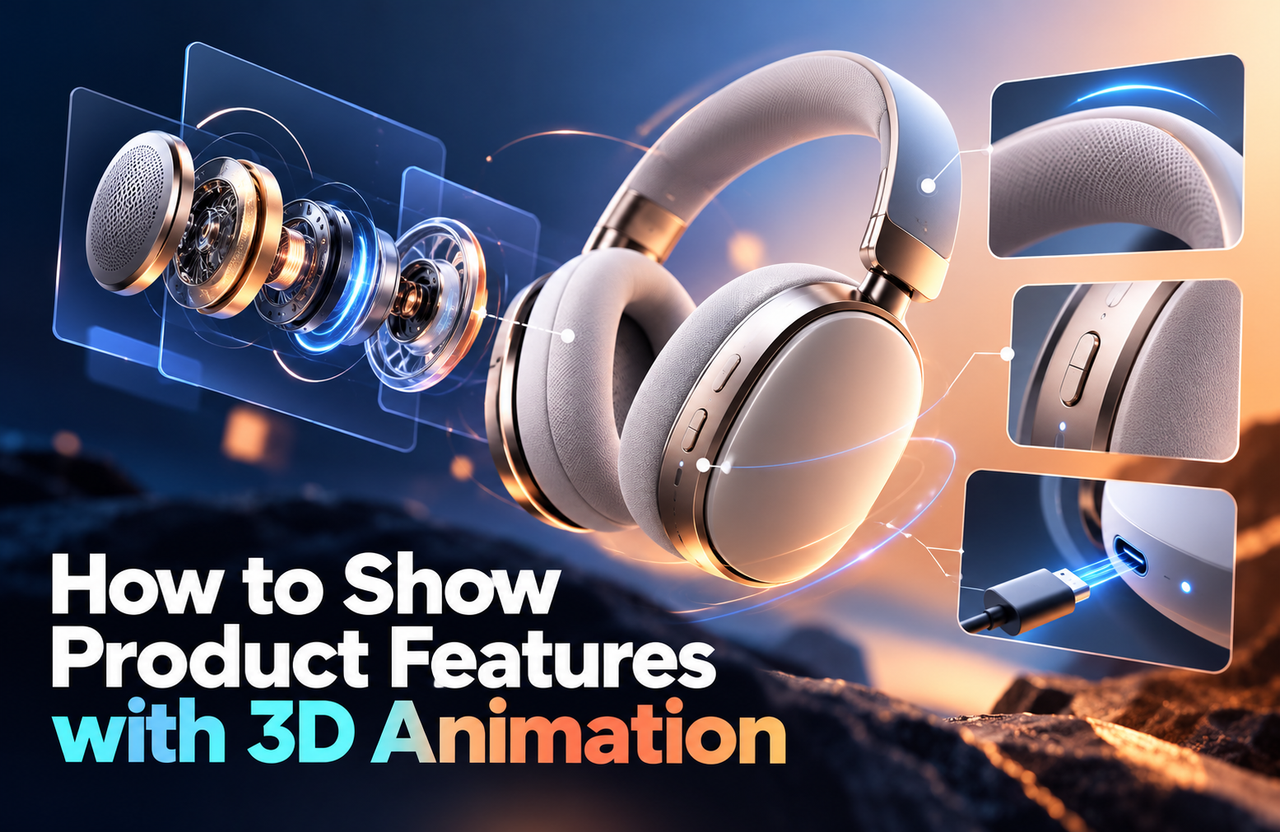
A 3D product video can reveal a product feature from a view that is difficult to film. A camera can move inside a space, components can separate, and an object can be shown from a carefully controlled angle. These choices are useful only when they help the viewer understand a real feature.
Start with a feature and a viewer question
Choose one feature the audience needs to understand. Ask what is unclear from a still image: how a part moves, where a component sits, how two pieces connect, or what changes when a control is used. Each shot should answer a question rather than simply show motion.
If several features matter, order them by importance and make the transitions easy to follow. Do not crowd the video with labels for details that are not central to the product story.
Choose a view that explains the feature
A close-up can reveal material or a small mechanism. A cutaway can expose an internal component; an exploded view can show how parts relate; a camera move can reveal shape and scale. Use these techniques selectively and make the relationship between components clear.
Show movement at a pace that viewers can understand. If an action is not physically possible, or if a product is still being designed, mark the representation accurately and get engineering approval before publication.
Balance detail with the whole product
Begin or end with a view that helps viewers recognize the complete product. A sequence of close-ups without context can make it hard to understand where each part belongs. Use consistent scale, camera direction, and lighting to help the audience connect details back to the object.
Keep text and motion graphics legible and use them to identify the feature, not decorate it. If narration is included, let it explain why the feature matters while the animation shows how it works.
Review with product experts
Ask engineering or product reviewers to confirm geometry, movement, materials, and any claims. Have a new viewer watch the video and describe what they learned. If the feature remains unclear, revise the sequence or simplify the story before adding more visual effects.
A focused 3D sequence can make a complex feature easier to inspect while keeping the representation accurate.